
Salt: The White Gold That Shaped World History and Lanzarote
21 October 2026 · Lanzarote Experience Tours Team
A journey through the world's salt pans to discover one of the most remarkable landscapes in the Canary Islands: the Janubio Salt Pans.
Some places tell stories without the need for words. Landscapes that may seem simple at first glance, yet hold centuries of hard work, tradition and an extraordinary relationship between people and nature.
Salt pans are among those special places.
For thousands of years, salt has been much more than a kitchen ingredient. It has helped preserve food, encouraged trade and supported entire economies. It was once so valuable that it became known as white gold.
Today, we invite you on a journey through the history of salt and some of the world's most fascinating salt-producing landscapes, before arriving at a very special corner of Lanzarote.
Salt: A Tiny Crystal with a Remarkable History
Long before refrigerators existed, people needed ways to preserve food.
Salt made it possible to preserve fish, meat and other products for extended periods, facilitating travel, trade and the supply of food to communities.
Its importance was so great that trade routes, settlements and economic activities developed around its extraction and distribution, many of which continued for centuries.
But salt is not merely a part of the past.
Today, it remains essential in food production, industry and countless processes in our everyday lives.
Behind the small white crystals on our tables lies a truly universal story.
Salt Pans Around the World: Landscapes of Water, Sun and Tradition
Salt can be obtained from underground mines, salt lakes or through the evaporation of seawater.
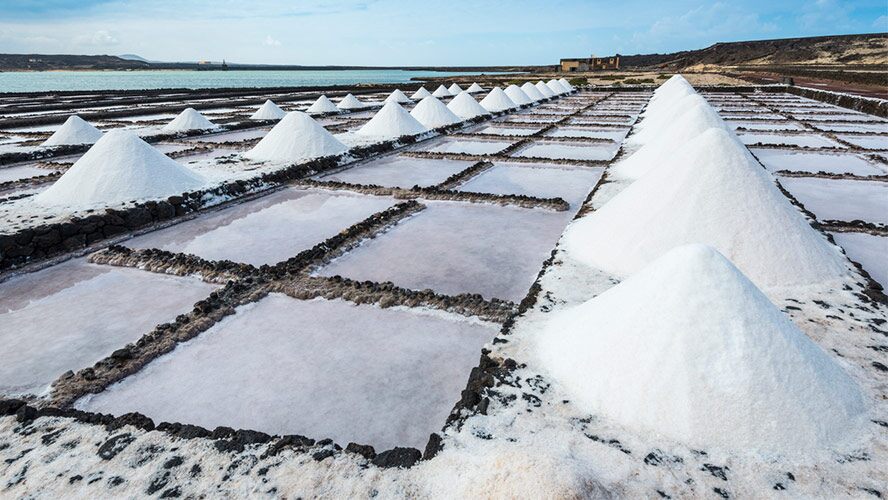
In many coastal regions, traditional salt pans rely on three natural elements: seawater, sunshine and wind.
Seawater is channelled into shallow ponds, where it gradually evaporates until the salt concentration becomes high enough for crystals to form.
Although the principle may seem simple, the process requires experience, patience and a deep understanding of natural conditions.
Some places around the world have made salt production an essential part of their cultural heritage.
The Maras Salt Pans, Peru
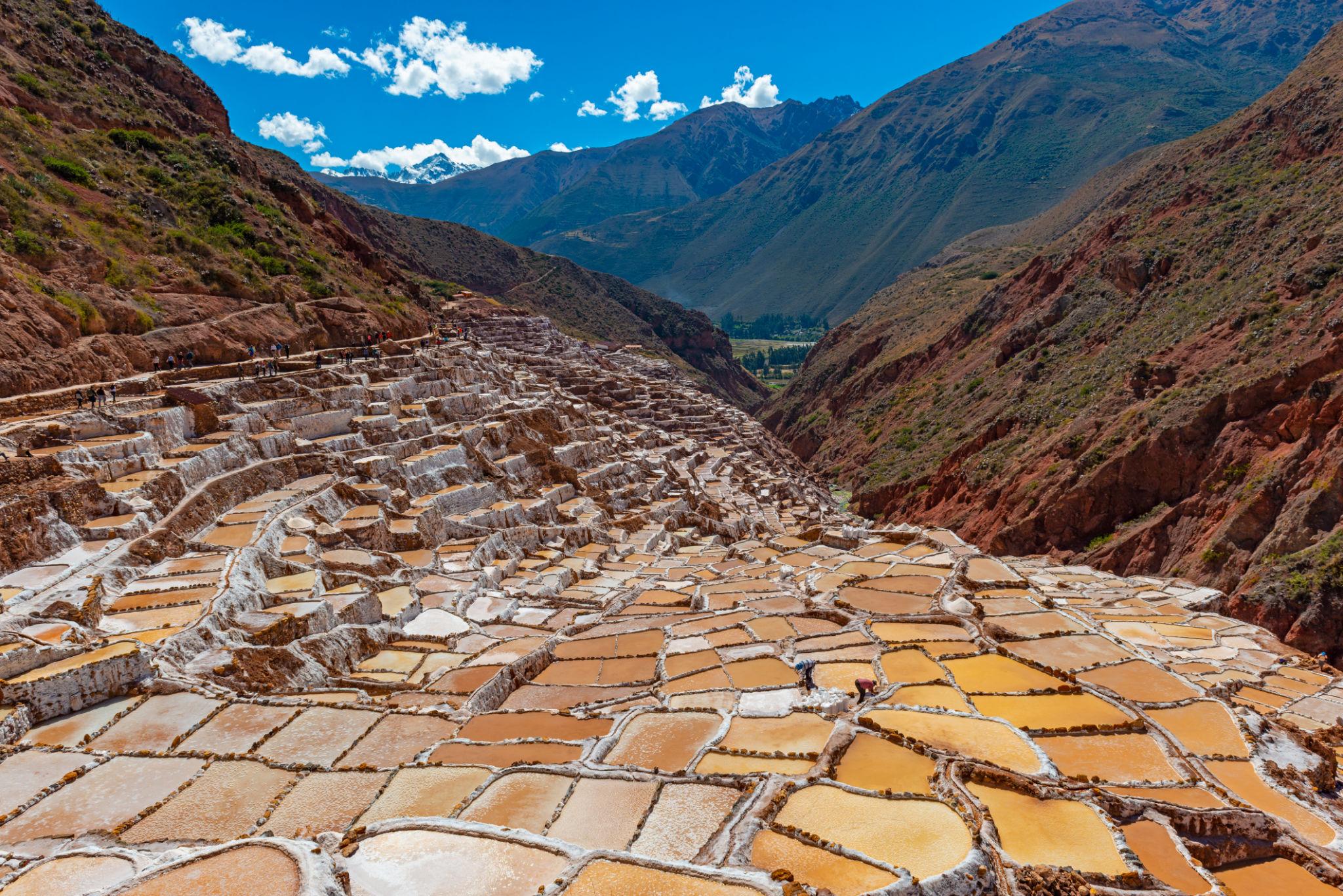
Located high in the Andes, the Maras Salt Pans form a remarkable network of small terraced pools, fed by salty water from a natural spring.
Their extraordinary landscape shows that salt production is not limited to coastal areas.
The Wieliczka Salt Mine, Poland
Deep underground lies a completely different world.
The historic Wieliczka Salt Mine, recognised as a UNESCO World Heritage Site, contains tunnels, sculptures and chambers carved into salt, revealing the extraordinary importance of this mineral in European history.
Traditional Salt Pans of the Mediterranean
From Spain to Italy and other Mediterranean regions, sea salt production has shaped landscapes of geometric ponds, windmills, channels and white mountains of salt.
Many of these environments also provide important habitats for birds and other organisms adapted to saline conditions.
And it is here, in the Atlantic Ocean, on an island born from fire, that we discover one of the Canary Islands' most distinctive salt-producing landscapes.
Janubio Salt Pans: Lanzarote's White Gold
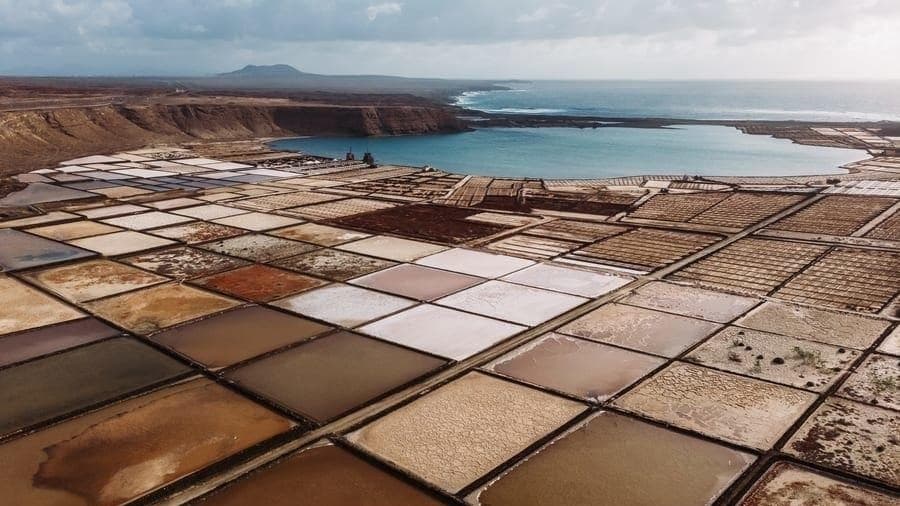
On the southwestern coast of Lanzarote, near Los Hervideros and El Golfo, lie the Janubio Salt Pans, the largest traditional salt pans in the Canary Islands.
Their story begins long before the salt ponds were built.
Between 1730 and 1736, the great volcanic eruptions of Timanfaya dramatically transformed Lanzarote's landscape.
Lava flows altered the former bay of Janubio, helping create a coastal lagoon that would later provide exceptional conditions for salt production.
Construction of the salt pans began in 1895, with further development during the early decades of the 20th century.
For generations, salt production was closely linked to Lanzarote's fishing industry.
Salt was essential for preserving fish, particularly before modern refrigeration systems transformed the industry.
Over time, many traditional salt pans disappeared or ceased production.
However, Janubio has managed to preserve its traditional salt-making activity.
Today, the site remains a testament to generations of salt workers who have worked under the sun, surrounded by Atlantic winds and seawater.
A Landscape Where Volcanoes Meet Salt
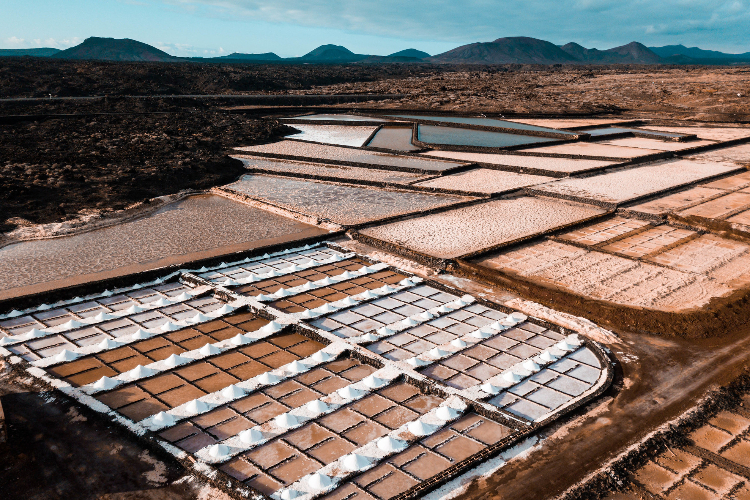
One of the most striking features of Janubio is the contrast of its colours.
The black volcanic landscape, the brilliant white salt and the varying shades of water create an almost abstract scene.
But these colours are not merely decorative.
Within the salt ponds exists a fascinating miniature world of organisms capable of surviving in extremely saline conditions.
And this is where one of the most curious characters in our story appears.
Artemia: The Tiny Crustacean Living Among the Salt
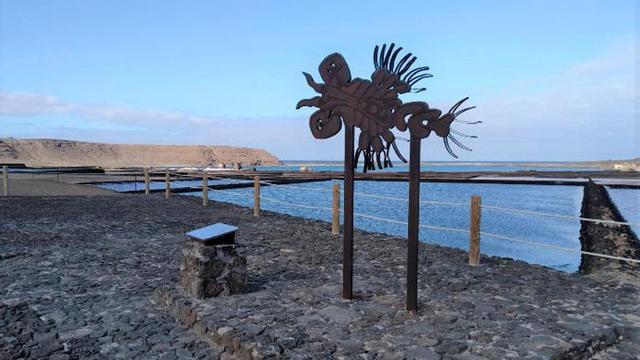
If you visit the Janubio Salt Pans, you may come across an unusual sculpture representing a tiny creature closely associated with these ecosystems.
It represents Artemia, a small crustacean adapted to living in highly saline waters.
Although largely unknown to many visitors, these tiny creatures play an important ecological role.
Artemia form part of the food chains within saline ecosystems and can provide food for different species of birds.
Other microorganisms also thrive in these waters, including the microalga Dunaliella salina, which contributes to the remarkable pink and reddish colours sometimes visible in the salt ponds.
Nature finds ways to support life even in places where conditions might seem impossible.
And that makes Janubio much more than simply a place where salt is produced.
Much More Than Salt: A Heritage Worth Preserving
The Janubio Salt Pans bring together history, culture, biodiversity and landscape.
Preserving them means protecting a traditional activity, keeping alive the knowledge of generations of salt workers and safeguarding an environment of considerable ecological value.
It also reminds us that Lanzarote's landscapes have been shaped not only by volcanoes, but also by generations of people who learned to live and work in this extraordinary environment.
Discover the Janubio Salt Pans During Your Visit to Lanzarote
If you are planning a trip to Lanzarote, the Janubio Salt Pans are well worth admiring.
They form part of one of the island's most spectacular southern landscapes, alongside Timanfaya National Park, El Golfo, Los Hervideros and La Geria.
At Lanzarote Experience Tours, we love sharing these stories because we believe that discovering an island means much more than visiting its famous attractions. It means understanding its traditions, nature and the people who have shaped its identity.
Lanzarote is an island of volcanoes, but also of the sea, salt and stories worth telling.