
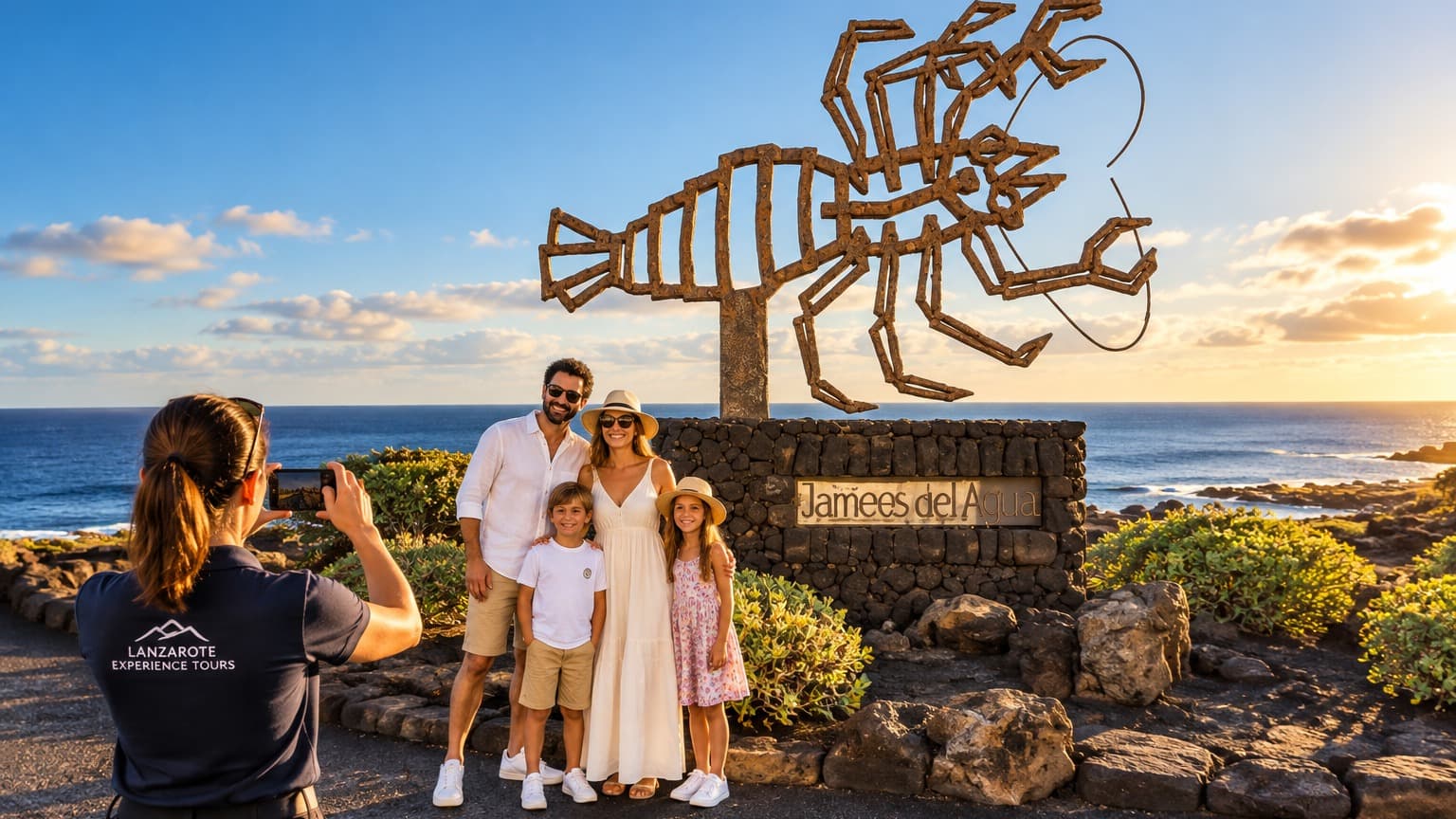
Jameos del Agua Lanzarote Guide: Tickets, Prices and What to See
16 September 2026 · Lanzarote Experience Tours
In the north of Lanzarote, beneath a landscape shaped by the eruptions of the La Corona volcano, lies one of the island’s most remarkable places: Jameos del Agua. Here, nature and human creativity seem to become part of the same work. César Manrique transformed a section of an ancient volcanic tube into a space where lava, water, vegetation, architecture and light coexist without hiding its volcanic origins. Jameos del Agua was also the first Art, Culture and Tourism Centre created by César Manrique, becoming an early example of the relationship between art and nature that would later define much of his work in Lanzarote.
In this guide, you’ll find what to see at
Jameos del Agua, how long to allow, ticket information, opening hours and
practical tips for planning your visit.
What is Jameos
del Agua?
To understand Jameos del Agua, we need to go back long before César Manrique. The eruptions of La Corona volcano, in northern Lanzarote, created an enormous volcanic tube as lava flowed towards the Atlantic Ocean. Over time, sections of the tube’s roof collapsed, creating natural openings known locally as jameos.
Jameos del Agua occupies part of this
extraordinary volcanic system. Nearby you’ll also find Cueva de los Verdes,
which belongs to the same lava tube, although the two attractions offer
completely different experiences.
César
Manrique: transforming a landscape without hiding its nature
What makes Jameos del Agua special is not only its geological origin. César Manrique recognised the potential of this extraordinary natural space and transformed it into a place for art, culture and human experience while preserving its volcanic character.
Rather than hiding the lava beneath conventional architecture, he did the opposite: he made it the protagonist. Stone stairways, vegetation, wood, white surfaces and open spaces appear naturally among the original volcanic formations. This approach to integrating architecture and landscape became one of Manrique’s defining characteristics and can also be seen at places such as Mirador del Río, Jardín de Cactus and his former home in Tahíche.
What to See
at Jameos del Agua
A visit to Jameos del Agua unfolds gradually.
From the bright exterior, you descend into the volcanic tube and discover a
series of very different spaces.
1. Jameo Chico
The visit begins by descending into Jameo Chico. The atmosphere changes almost immediately. Lanzarote’s intense daylight gradually disappears as you enter a world of volcanic rock, vegetation and carefully integrated architectural details. It is the first glimpse of what Manrique wanted visitors to experience: the feeling of entering a space created by a volcano rather than simply walking into a building.
2. The natural
lake and its tiny white crabs
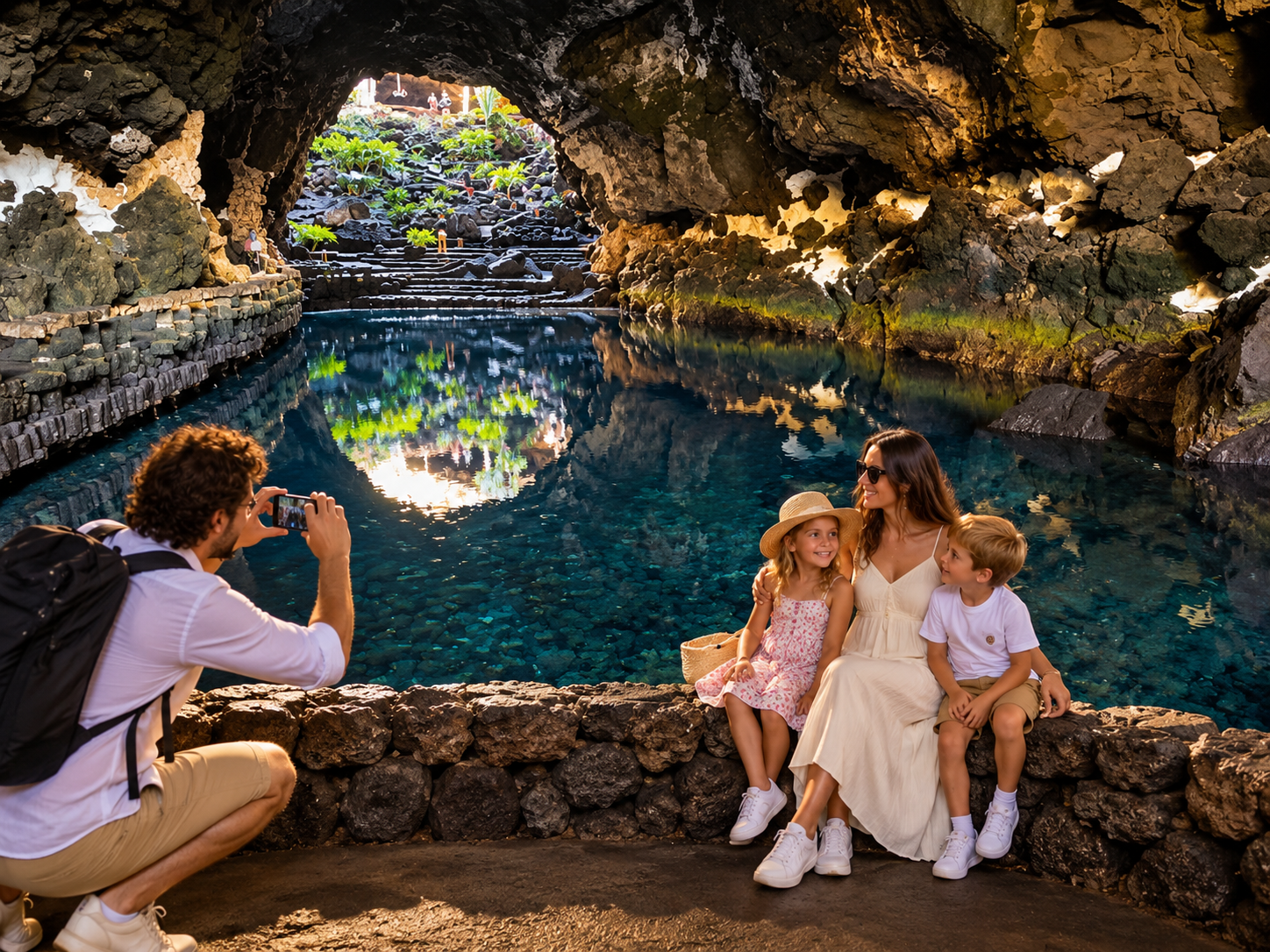
Continue through the volcanic tunnel and you’ll reach one of the most fascinating parts of Jameos del Agua: its natural underground lake. The water is connected to the ocean and is home to one of Lanzarote’s most unusual inhabitants: the tiny blind white crabs associated with Jameos del Agua. They are extremely small and sensitive to changes in their environment, so visitors should admire them without disturbing the water or throwing anything into the lake.
Their presence is an important reminder that
Jameos del Agua is not simply an artistic creation. It remains a living
natural ecosystem.
3. Walking
beside the lake
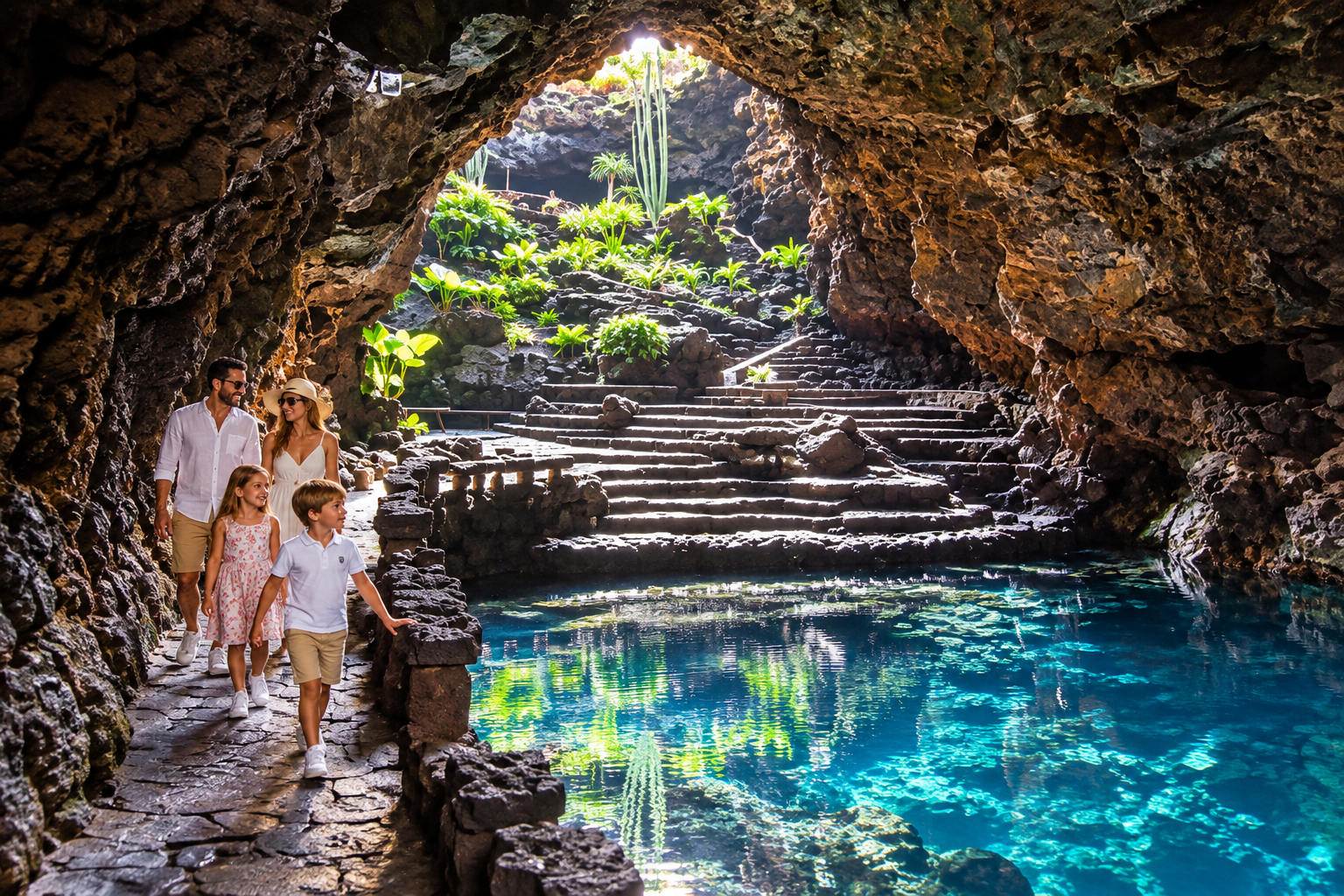
The route continues along the water between volcanic walls. This is a place worth exploring slowly. Natural light enters through openings above and reflects across the lake, continually changing the appearance of the cave. It is one of those moments when it can be worth putting the camera away for a few minutes and simply taking in the surroundings.
4. Jameo
Grande and the famous white pool
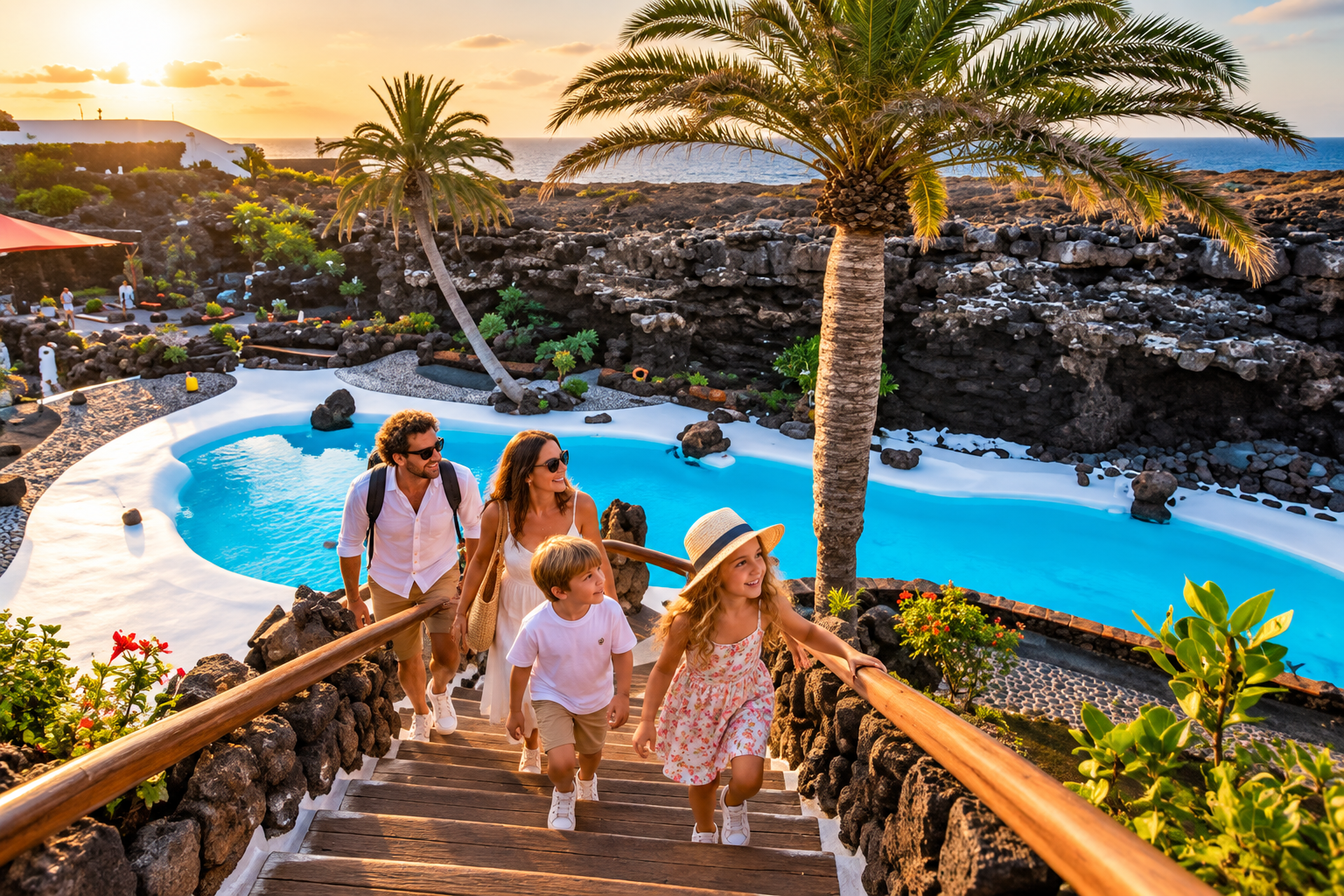
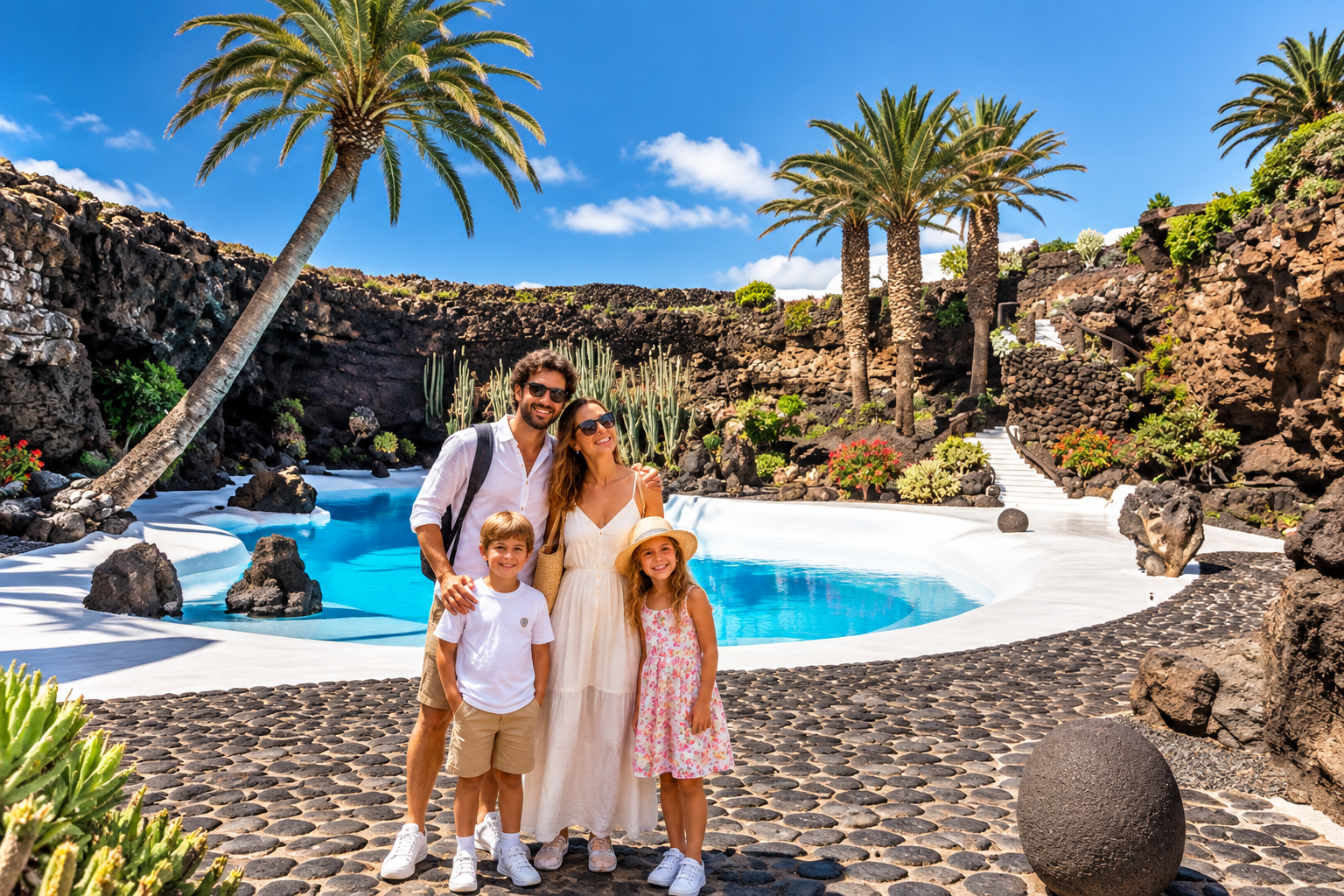
After passing through the underground section, you emerge into Jameo Grande, where the scenery changes completely. The darkness of the lava tube gives way to an open space filled with palm trees, vegetation, volcanic rock and the famous blue pool surrounded by brilliant white surfaces. The combination of black, white, green and blue has become one of the most recognisable images of Jameos del Agua. The pool forms part of Manrique’s design and is one of the great visual icons associated with his work.
5. The
Auditorium
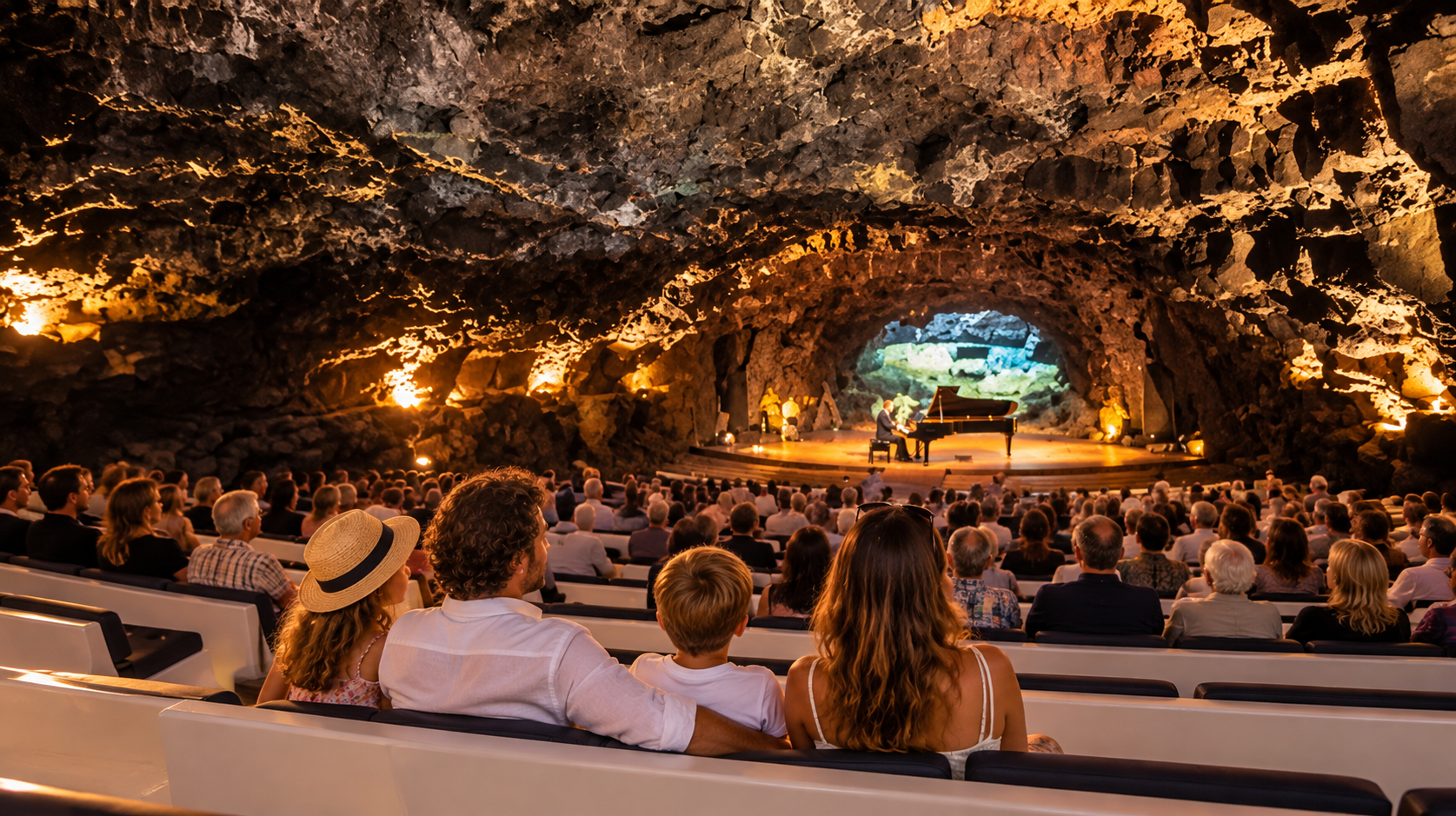
Jameos del Agua has another surprise hidden inside the volcanic tube: its Auditorium. Rather than concealing the original cave, the space incorporates the natural lava walls and ceiling, creating a setting unlike a conventional concert hall. Concerts and cultural events are held here on selected occasions, giving visitors the opportunity to experience music inside an extraordinary volcanic environment.
6. Casa de los
Volcanes
Your visit can also include the Casa de los Volcanes, an interpretation centre dedicated to Lanzarote’s geology and volcanic activity. Interactive and immersive exhibits help visitors understand the geological processes that created the island and the volcanic landscape we see today.

This can be particularly interesting for
families, as it turns geological concepts that may be difficult to imagine into
a much more visual experience.
Can You Eat
at Jameos del Agua?
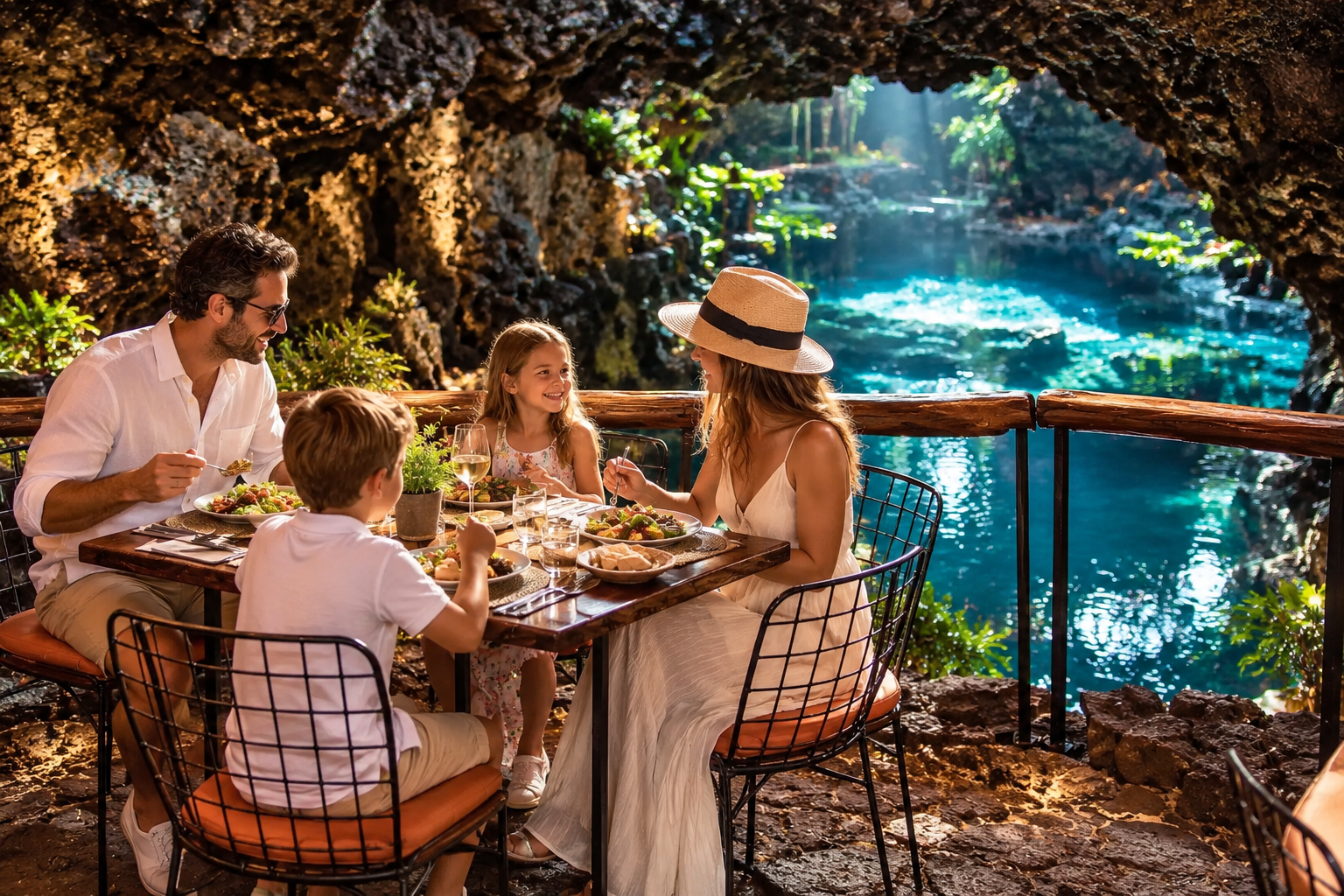
Yes. Jameos del Agua has food and drink facilities integrated into the complex. Stopping for a coffee, an ice cream or something to eat surrounded by volcanic rock can be a lovely way to extend your visit.
Jameos del
Agua at Night
Jameos del Agua takes on a very different atmosphere after dark. Carefully designed lighting highlights the lava, water and vegetation, creating an experience quite different from a daytime visit. If you are interested in an evening or dining experience, check the current programme and availability before travelling, as events and opening arrangements may vary throughout the year.
Visiting
Jameos del Agua with Children
Yes, Jameos del Agua is well worth visiting as a family. The underground lake, tiny white crabs, volcanic formations, pool and interpretation spaces make the experience highly visual and engaging for children. Bear in mind, however, that this is a volcanic environment with steps and changes in level, so comfortable footwear is recommended and younger children should be supervised closely.
Are Jameos
del Agua and Cueva de los Verdes the Same Place?
No — although it is easy to understand why visitors sometimes confuse them. Jameos del Agua and Cueva de los Verdes form part of the volcanic system created by La Corona volcano, but they are separate attractions and offer very different experiences.
At Cueva de los Verdes, you journey through the interior of the lava tube and discover its tunnels, colours and volcanic formations. At Jameos del Agua, the volcanic environment is combined with César Manrique’s intervention to create a space where nature, architecture, art and culture come together.
For this reason, visiting one does not
necessarily replace visiting the other.
👉 Cueva de los Verdes Lanzarote Guide
Jameos del
Agua Opening Hours
Current general opening hours are:
10:00 am – 6:00 pm
Last admission: 5:15 pm
Open 365 days a year.
Allow approximately 60–120 minutes for
your visit.
Opening times and conditions can change, so we
always recommend checking the official information before travelling.
Jameos del
Agua Tickets and Prices
General admission currently starts from €17 for adults, while children aged 0–6 enter free of charge. Other rates and discounts may apply depending on age and circumstances, so it is best to check the current price when planning your visit.
Different ways of experiencing Jameos del Agua
may also be available, including the standard visit, options involving Casa de
los Volcanes and the guided Experiencia Insólita, which provides access
to selected areas not normally included in the standard visit.
👉 Official Jameos del Agua tickets and opening hours
This approach also means the article remains
useful if ticket prices change in the future.
What Is the
Best Time to Visit Jameos del Agua?
If you are visiting independently, arriving earlier in the day can make it easier to organise the rest of your itinerary, particularly if you want to combine Jameos del Agua with other attractions in northern Lanzarote. A day in this part of the island could include Cueva de los Verdes, Mirador del Río, Haría or Jardín de Cactus, depending on the time you have available. However, trying to fit too many places into one day can mean spending more time watching the clock than enjoying the experience.
How to Get
to Jameos del Agua
Jameos del Agua is located in northern
Lanzarote, in the municipality of Haría, on the road between Arrieta and
Órzola.
You can reach it independently by car or visit as
part of an organised excursion.
For first-time visitors to Lanzarote, including
Jameos del Agua in a wider island itinerary can also help explain the
connection between the volcanic landscape and César Manrique’s work.
Visiting
Jameos del Agua with Lanzarote Experience Tours
Jameos del Agua is included in some of our tours
around Lanzarote.
Our Grand Tour Lanzarote is an
approximately 9-hour small-group experience for up to 14 guests, combining Timanfaya
National Park, El Golfo and Charco de los Clicos, La Geria, Jameos del Agua and
Jardín de Cactus. Admission tickets included in the itinerary are included
in the tour.
👉 Discover our Grand Tour Lanzarote
You can also discover Jameos del Agua on our César
Manrique Tour, designed to explore the relationship between the artist’s
work and Lanzarote’s volcanic landscapes.
The itinerary includes some of the island’s most
emblematic places associated with Manrique, alongside the extraordinary natural
landscapes that inspired his work.
👉 Discover our César Manrique Tour
Our regular tours are organised in separate English,
Spanish and German groups, so you can enjoy the explanations in your chosen
language. Admission tickets included in the itinerary are included in the tour.
Discover
César Manrique’s Lanzarote
Jameos del Agua is one of those places that helps you understand Lanzarote. First came the volcano. Then time, water and life transformed the landscape. Centuries later, César Manrique saw the possibility of creating something new here without erasing what nature had already created. The hidden lake beneath the lava, the tiny white crabs, vegetation, pool, Auditorium and extraordinary forms of the volcanic rock each tell a different part of the same story.
And that story continues beyond Jameos del Agua. Nearby, Cueva de los Verdes, the landscape of La Corona volcano and other works by Manrique reveal another side of northern Lanzarote. Further south, Timanfaya, La Geria and the island’s vast lava fields show just how profoundly volcanic activity has shaped Lanzarote’s landscape, architecture and way of life.
To discover Jameos del Agua is to step inside a volcano — and to begin to understand Lanzarote.